
The Daily Frustration
You didn’t spend five years in dental school to become a middle manager.
You did it to be a clinician. You did it to perform complex restorations, transform smiles, and master your craft.
Yet, if you are like most suburban practice owners in Perth . . .
. . .You Spend Less Time Being A DENTIST
And More Time Being A REFEREE!
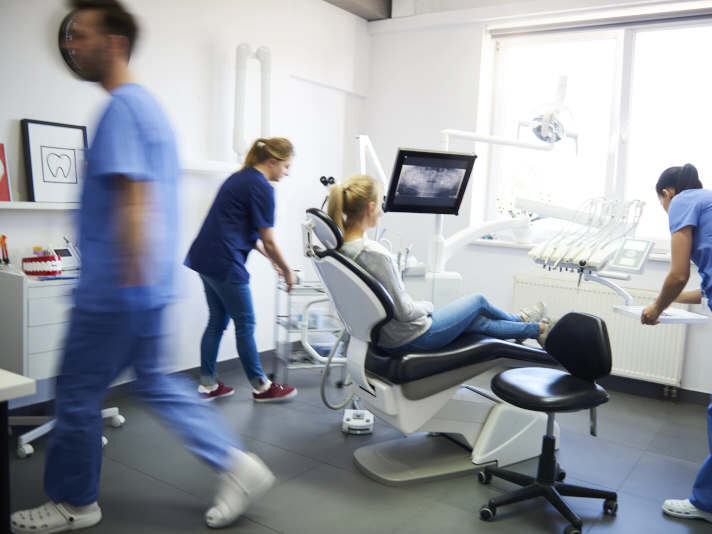
You finish a complex prep, take off your loupes, and are immediately ambushed. "Jane is upset about the roster." "We ran out of bond." "Mrs. Smith is refusing to pay the gap."
Your mental energy—the fuel you need for high-production clinical work—is being drained by low-value administrative friction.
Many owners think the solution is to "be a better boss." They read books on leadership, try to be more charismatic, or buy the team pizza on Fridays.
But . . .
. . . "Vibes" Don't Build Businesses,
SYSTEMS Build Businesses!
The secret to a high-revenue, low-stress practice isn't finding "better people." It’s building a Culture of Mutual Competency.
When you get the culture right, the practice runs itself. And when the practice runs itself, you are free to do what you do best: Generate revenue in the chair.
The "Culture" Myth vs. Reality
In the corporate world, culture is often a fluffy buzzword. In a dental practice, culture is a financial metric.
A "Good Culture" is not about everyone being best friends. . .
A Good Culture Is What Happens
When Effective Systems
Are Universally Respected!
It looks like this:
-
- Safety: Staff are not afraid of you. They are not afraid of making a mistake, provided they own it. This means problems are solved instantly, not hidden until they explode.
-
- Fairness: The rules apply to everyone. The "star" DA doesn't get to skip protocol just because they’ve been there for 10 years.
-
- Competency: Every team member knows exactly what "good" looks like because they have been trained on the job, in your clinic, on your specific systems.
When you install this kind of culture, you stop being a micromanager. You become a Clinical Director.
The 10 Revenue Levers of Culture (How Harmony Pays the Bills)
You might be wondering: "How does 'good culture' pay for my new OPG machine?" The link is direct and brutally clear.
Here are TEN specific ways how culture impacts your bottom line. SIX that directly increase the income of your practice, and FOUR that keep your money from flying away.
DIRECT Revenue Drivers (SIX Immediate Financial Impacts)
1. The "Transfer of Trust" (Case Acceptance): Patients are human lie detectors. When a Hygienist or a DA respects the dentist, they non-verbally affirm the diagnosis. A cohesive culture increases case acceptance rates by 20-30% because the staff continually validates your expertise.
2. The "Relentless" Recall System: Staff who feel "ownership" don't just send one SMS and give up. They chase the recall because they care about the patient's health and the practice's success.
3. Zero-Friction Handovers: In a high-culture practice, the handover from Dentist to Front Desk is seamless. No information is lost, financial discussions are handled confidently, and the patient pays.
4. Reduced Cancellations: Happy staff build rapport. Patients are less likely to cancel on "Sarah the Receptionist," whom they like and respect, than on "that rude lady at the front."
5. Internal Referrals: Staff who are proud of where they work refer their friends and family. This is free, high-trust marketing that toxic cultures never get.
6. Boosted Reviews & Referrals: Good Google reviews are gold dust to suburban practices, and staff who are happy project a vibe that enhances the patient experience significantly. Those patients are far more likely to leave good reviews if they enjoyed the experience, and also to personally recommend your practice to friends and colleagues.
INDIRECT Revenue Drivers (The FOUR "Freedom" Factors)
1. The "Zone of Production": When the culture is autonomous (staff handle problems), the dentist is not interrupted. This allows you to stay in the chair doing $1,000 hour work rather than fixing a $30 hour roster issue.
2. Retention vs. Recruitment Costs: Replacing a DA in Perth costs roughly $5,000–$10,000 in lost productivity, ads, and training. A culture of "safety and fairness" retains staff, keeping that money in the bank.
3. Mistake Mitigation: In a culture of "fear," mistakes are hidden until they become lawsuits or refunds. In a culture of "mutual competency," mistakes are flagged and fixed immediately, saving thousands in rework.
4. The "Moat" Against Poaching: Competitors can offer an additional $2 per hour more, but they cannot offer a stress-free, supportive environment. Culture is your BEST defense against wage wars, even when you find yourself in a salary showdown with BHP, RIO TINTO or FMG!
How We Build This (Because You Can't "Wish" It into Existence)
You cannot lecture a team into having a good culture. You have to build it, brick by brick.
This is where most owners get stuck. You are a dentist, not a corporate trainer. You don't have time to write procedure manuals, conduct training, or closely monitor and manage the interpersonal staff dynamic.
That is where we come in.
We don't just give you a binder of rules. We install the culture for you through:
-
- On-Site Systems Installation: We physically set up the workflows in your practice, not a classroom.
-
- On-the-Job Training: We train your staff while they work, showing them exactly how to execute your new standards.
-
- Systematic Monitoring: We don't just teach and leave. We implement monitoring tools that show you exactly who is following the system and who isn't.
This removes the emotion. You don't have to get angry at staff; you just look at the data. "The system says we need 85% rebooking. We are at 60%. Let’s train on this."
The End Game: The Autonomous Practice
Imagine walking into your practice on a Monday morning. The huddle is already done. The trays are set up exactly how you like them. The first patient has been prepped, their medical history updated, and their payment plan signed. You sit down. You do the dentistry. You stand up. The team takes over.
You go home on time, with a full production report on your desk, and zero "people problems" to solve.
This isn't a fantasy. It is the result of a Systemized Culture.
If you are tired of the chaos and ready to focus on the dentistry, let's look at your systems.